Testimonials
“We now have a shared language across product and go-to-market to describe what causes prospects to enter the market and why they hire or don't hire our product, or why they churn. … I would hire René again every time.”
Lars Böhnke, Head of Product, Candis
Full testimonial
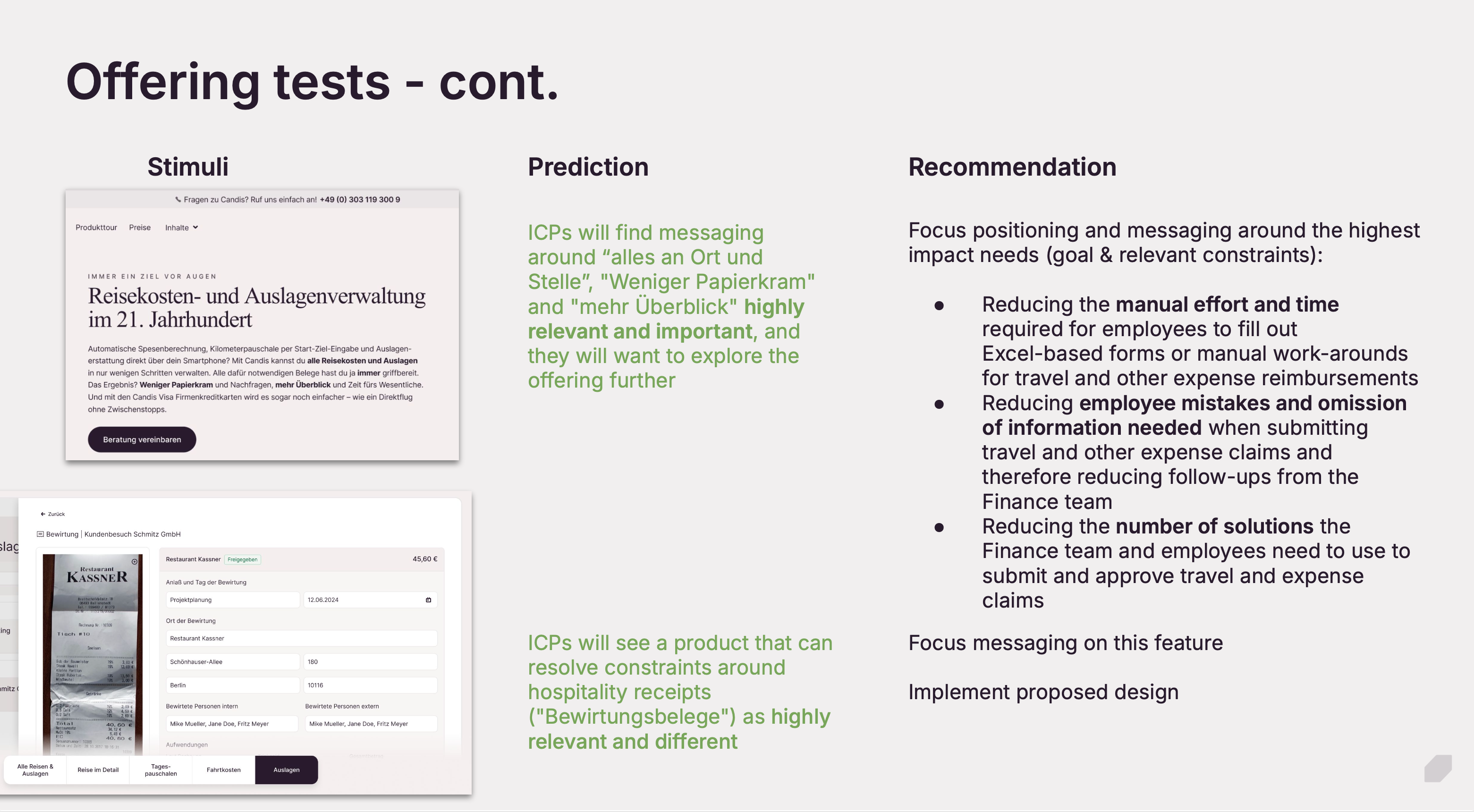
René was the first reseracher I hired at Candis. I was working before in a freelancer capacity. He was helping us conducting some JTBD studies to understand what Job customers were hiring our product for, and what caused them to enter the market. René helped us to foramlize the way we run such studies to continously generate insights into the market and buying behavior of our customers. Now, three years later, we're collecting such insights on an ongoing basis even in sales calls. René expanded the data model behind the JTBD theory to standardize the way we capture data about our market across Candis. We now have a shared language across product and go-to-market to describe what causes prospects to enter the market and why they hire or don't hire our product, or why they churn. Being able to describe growth problems precisely puts our community quality on a new level and opens up new options that weren't accissble to us before. René also taught us how to run simulations for growth ideas to predict whether consumers will likely hire an offering or not. This new way of thinking caused us to think about growth in structured ways, thinking about GTM and monetization upfront, not just about the pure product experience. We were able to dismiss some ideas that couldn't generate any Willigness-to-Hire and in turn were able to identify a few offering ideas that truly influenced the trajectory of Candis, both in terms of monetization and positioning. If you want to grow, and are looking for a way to rally both product and GTM behind, I can only recommend working with René. He will bring a new way of thinking based on JTBD theory, a proven data model, and a shared language for the whole organization to describe and diagnose growth issues. If I would work at an org, where product and GTM are not yet speaking the same language and thinking about growth the same way, I would hire René again every time.
“You can tell that he truly cares about finding the truth behind the answers. … Many decisions in our website strategy are based precisely on these conversations.”
Vicky Peucker, Digital Product Designer, Candis
Full testimonial
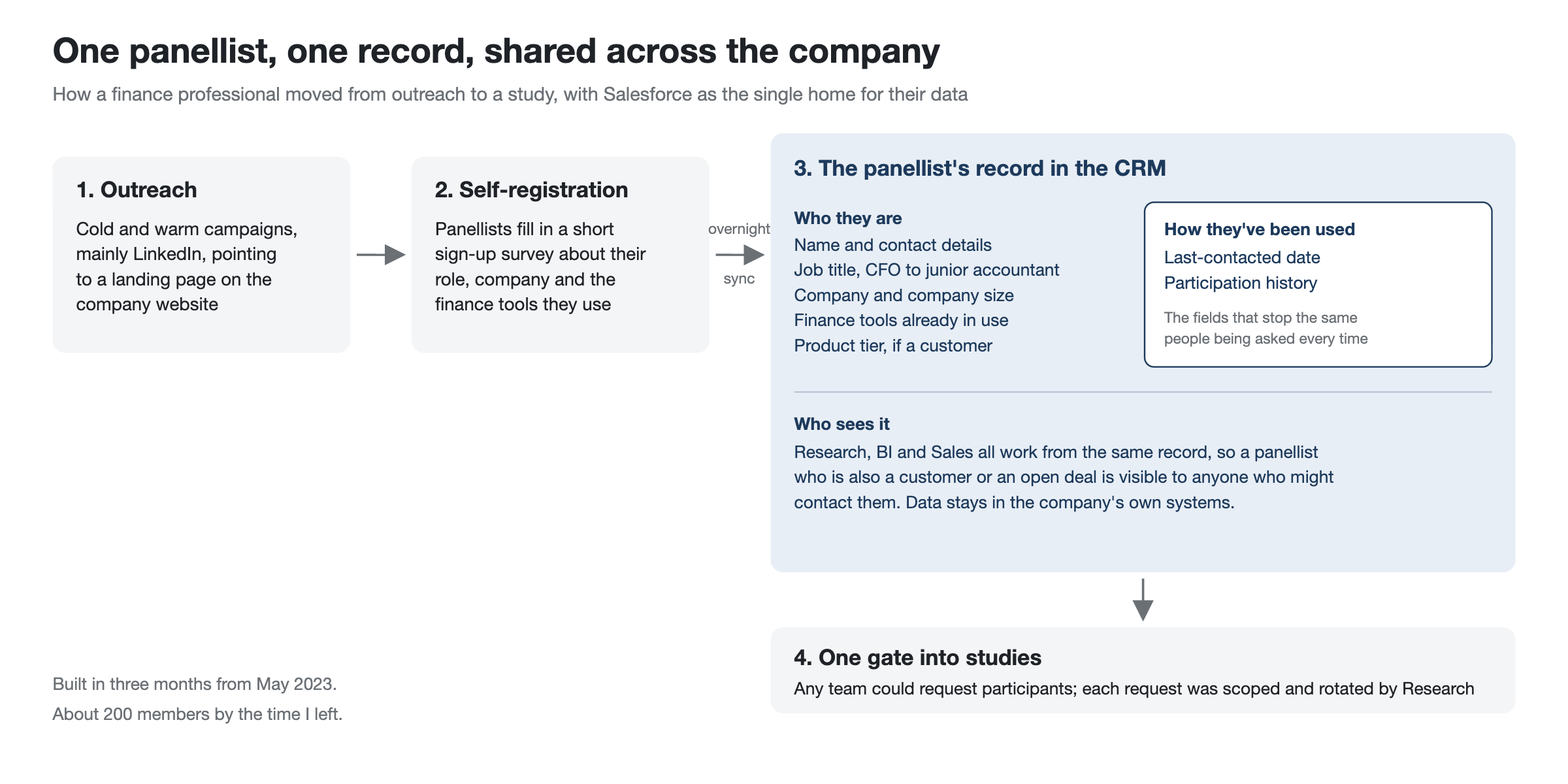
I was very fortunate to work with René on various website studies. As a Growth Researcher, he not only built a highly structured database with suitable people from our (quite heterogeneous) target group, but he also always knew exactly how we could best approach them. Whenever I wanted to test new concepts or components of our marketing website, René was immediately on board, from recruitment to conducting and analyzing the interviews. He brings a calm, highly focused energy and gets to the bottom of things with great attention to detail. You can tell that he truly cares about finding the truth behind the answers. I particularly appreciate his analyses. Many decisions in our website strategy are based precisely on these conversations. I really enjoyed working with him and I am sure that any team can benefit from his way of working.
See the originals on LinkedIn (LinkedIn sign-in required).
I teach Jobs to be Done and the Simulated Selection method with Andrej Balaz, in workshops at Future Product Days (deck), WaysConf, UXinsight and Productized. Full career history on my CV.